
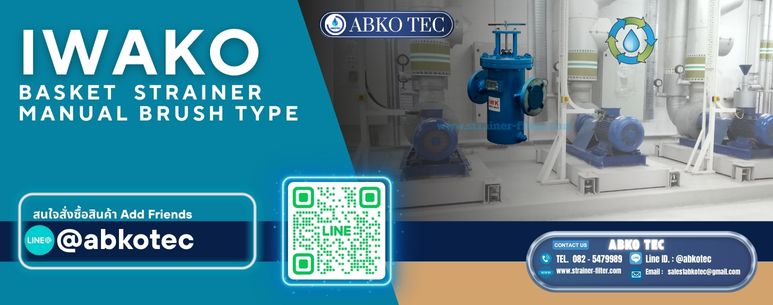
Basket Strainer
Pump Suction Strainer Requirements
เม.ย.
Pump Suction Strainer Requirements
Pump Suction Strainer Requirements : Pump cavitation is a well-documented hydraulic phenomenon that occurs when the local pressure of a liquid falls below its vapor pressure, causing vapor bubbles to form and subsequently collapse within the pump. The collapse of these vapor cavities generates localized shock waves that can cause severe mechanical damage to pump impellers, casings, and associated hydraulic components.
In industrial piping systems, cavitation is often associated with improper suction conditions, inadequate Net Positive Suction Head (NPSH), excessive flow resistance, or the presence of solid contaminants within the fluid stream. While system design and pump selection play a major role in preventing cavitation, upstream filtration devices such as basket strainers also contribute significantly to pump protection and operational reliability.
Basket strainers function as mechanical filtration devices installed in pipeline systems to capture solid debris before it enters sensitive equipment. When properly sized and maintained, basket strainers help stabilize pump suction conditions, prevent blockage of internal pump passages, and reduce the risk of hydraulic disturbances that can contribute to cavitation and premature pump failure.
The Role of Solid Contaminants in Pump Damage
In industrial piping systems, fluids frequently contain suspended solids such as:
- Pipe scale
- Rust particles
- Welding slag
- Sand and sediment
- Process debris
- Corrosion products
When these solids enter a pump, they may cause several mechanical and hydraulic problems:
- Impeller Blockage
- Hydraulic Imbalance
- Abrasive Wear
- Passage Restriction
These effects collectively increase the likelihood of cavitation and mechanical damage.
Preventing solids from entering the pump is therefore a critical protective strategy.
How Basket Strainers Protect Pumps?
Primary Function of a Basket Strainer. A basket strainer is a mechanical filtration device installed in pipelines to remove solid particles from a flowing liquid. The device contains a perforated or mesh-lined basket that traps debris while allowing fluid to pass through. Basket strainers are typically installed upstream of pumps, heat exchangers, control valves, and other sensitive equipment.
The filtration process works as follows:
- Fluid enters the strainer body.
- The fluid passes through the strainer basket.
- Solid contaminants are retained inside the basket.
- Clean fluid exits the strainer and continues toward the pump.
This filtration process prevents debris from entering the pump suction line.
Stabilizing Pump Suction Flow. One of the most important contributions of a properly designed basket strainer is stabilization of suction flow conditions.
Pump suction systems require:
- Uniform flow velocity
- Minimal turbulence
- Sufficient suction pressure
- Minimal hydraulic disturbances
By removing solid debris, basket strainers reduce the likelihood of partial flow blockage within the pump suction piping.
Stable suction flow helps maintain the pressure conditions required to prevent vapor formation within the pump.
Preventing Internal Pump Blockage
Debris entering the pump can obstruct narrow passages between impeller blades. These blockages may create:
- Sudden pressure drops
- Flow separation
- Increased local velocity
- Hydraulic imbalance
Such disturbances can lower the pressure below the vapor pressure of the liquid, initiating cavitation.
Basket strainers eliminate this risk by capturing debris before it reaches the pump.
Design Considerations for Basket Strainers in Pump Protection
Correct engineering design of basket strainers is essential to ensure that the strainer itself does not create excessive pressure drop that could contribute to cavitation. Several design factors must be considered.
-Open Area Ratio
-Basket Perforation Size
-Pressure Drop Characteristics
-Strainer Body Strength
-Flow Rate
-Fluid Properties
-Allowable Pressure Loss
-Contamination Load
FAQ
Do basket strainers reduce the risk of pump cavitation?
Basket strainers reduce cavitation risk indirectly by removing debris that can obstruct pump passages or disturb hydraulic flow conditions. Properly designed strainers also help maintain stable suction flow.
Can a clogged strainer cause pump cavitation?
Yes. If a strainer becomes heavily clogged, the resulting pressure drop can reduce suction pressure and potentially contribute to cavitation. Regular maintenance prevents this condition.
Where should a basket strainer be installed relative to a pump?
Basket strainers are typically installed in the suction line upstream of the pump to prevent contaminants from entering the pump internals.
What particle size should a pump protection strainer capture?
The appropriate particle size depends on pump design and process conditions. The strainer should capture particles large enough to obstruct impeller passages or cause mechanical damage.
Ready Summary
Basket strainers help prevent pump cavitation and failure by removing solid contaminants from the fluid before it reaches the pump. Solid particles such as rust, pipe scale, and debris can obstruct impeller passages, create hydraulic instability, and accelerate mechanical wear.
By filtering these contaminants upstream of the pump, basket strainers maintain stable suction flow conditions and reduce the likelihood of flow disturbances that contribute to cavitation.
Proper engineering design is essential to ensure that the strainer itself does not introduce excessive pressure drop. Important design factors include open area ratio, perforation size, flow capacity, and material strength.
Correct installation, monitoring of differential pressure, and routine basket cleaning are necessary to maintain optimal filtration performance and protect pump reliability.
For technical inquiries related to industrial basket strainers, pump protection filtration, or strainer sizing in industrial piping systems, engineering consultation may be obtained through the following contact channels:
ABKOTEC
Telephone: +66 82 547 9989
Email: sales1abkotec@gmail.com
Line ID: @abkotec
Technical information and additional engineering resources are available at:
www.strainer-filter.com
www.abkotec.com
ABKOTEC provides technical support related to industrial strainer selection, filtration engineering considerations, and application-specific filtration requirements for industrial piping systems.
